


EYEBROW WAX, SHAPED AT HOME.
Brows are the one area where less is more. Eyebrow waxing is not about clearing a patch, it is about mapping your natural shape and lifting only the strays that fall outside it. With gentle, face-safe hard wax that grips at a low 150°F, you get crisp lines near the delicate eye area without dragging strips or gambling with your arches. Go slow, remove a little at a time, and keep the brow you love.
What you need for at-home brow waxing
A precise brow does not need a cabinet full of product. It needs a gentle, face-safe wax, a small warmer, a small applicator for control, and a grippier backup for coarse hair. Here is the lineup, in the order you reach for it.
 Best for the face
I'm Sensitive Meltdown Vegan Hard Wax
The go-to for brows. This coconut-scented hard wax is the gentlest formula in the line, made for delicate facial skin, and it lifts strays clean with no strip near the eye. Melts at a low, skin-safe 150°F.
 The mini warmer
The Mini Meltdown Machine
A compact warmer sized for small, precise work like brows. It holds wax at a steady low temperature so you are never guessing, and it fits neatly on a bathroom counter for touch-ups.
 For precision
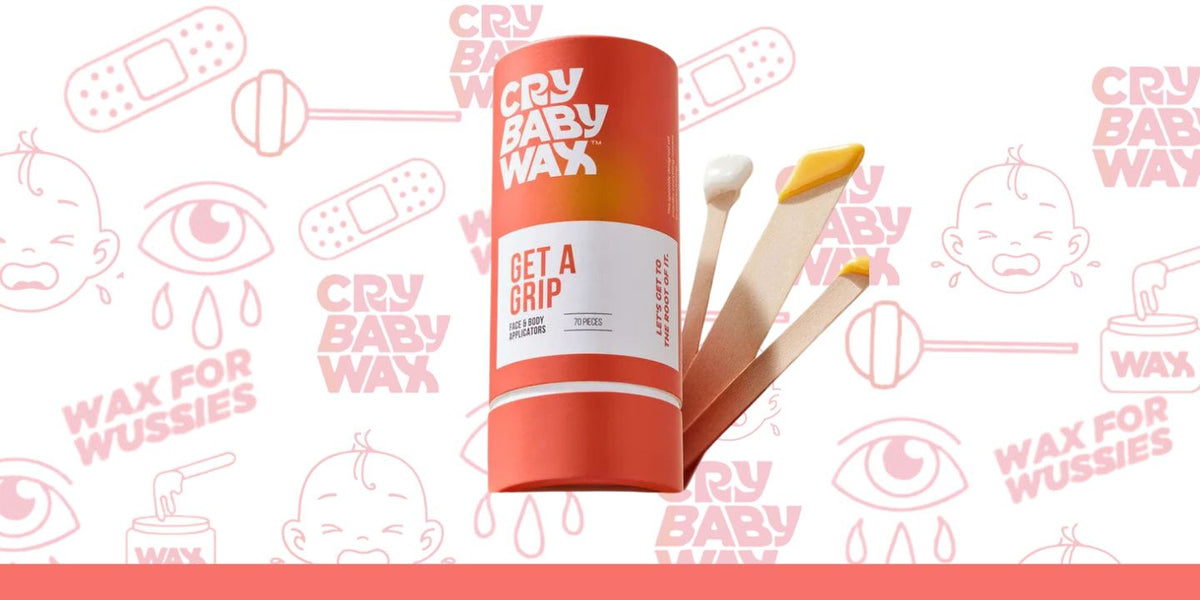
Get a Grip Applicators
Small applicator sticks built for precise, small-area work. They let you place a tidy cast exactly on the strays outside your mapped line, so you stay off the brow body and off the lid.
 For coarse brows
Full On Meltdown Vegan Hard Wax
For coarser or thicker brow hair that needs more bite. This mango-scented hard wax grips stubborn strays in one pull, still at a low 150°F, so tough hairs come away clean without extra passes.
Six things that make eyebrow waxing its own skill
Most waxing clears a zone. Brows do the opposite, you protect a shape and lift only the strays around it, on the thinnest skin on your face, inches from your eye. Here is what actually matters when the target is precision, not coverage.
The real risk is over-removal
Nobody regrets waxing too little off a brow. They regret taking off too much. Remove small amounts at a time, step back, and check before you go again. You can always take more. You cannot put it back this week.
You map before you remove
Every brow has three landmarks: the front or inner corner, the high point of the arch, and the tail. You decide the shape first, then only ever remove hair that falls outside those lines. The shape leads the wax, never the other way around.
Eye-area skin is delicate
The skin around the brow and eye is some of the thinnest on the body, so it reacts fast and lifts easily. That is exactly why a gentle, low-temperature hard wax matters here, and why hot soft wax and strips are the wrong tool near the eye.
Precision beats power
This is not the area where you want the grippiest, most aggressive wax. You want control. A clean cast that lifts a thin ribbon of strays in one direction gives you a defined edge without pulling into the brow body you meant to keep.
Actives change the rules
Facial skin on retinol, AHAs, or strong actives can lift with the wax. Pause them before you wax, and never wax while on isotretinoin, brand name Accutane, or prescription retinoids. This is a hard stop, not a suggestion.
Keep wax off the lid and lashes
Work only on the brow bone and the space between the brows. Keep wax off the eyelid entirely and well away from the lashes. A small applicator and a small warmer make it easy to stay exactly where you mean to be.
How to shape brows with wax, the honest way
Great brows at home come down to four moves. Map the shape, prep the skin, wax only the strays, and finish soft. Do these in order and you get a clean, defined brow without the over-plucked look that takes months to grow back.
Map the shape you want to keep
Line up three points: the front should start above the inner corner of your eye, the arch sits roughly two-thirds of the way out, and the tail ends on a diagonal from your nose past the outer corner. Brush the brow up and out so you can see the true outline you are keeping.
Prep and prime the skin
Cleanse, make sure the area is fully dry, and dust on a talc-free priming powder so the wax grips hair and not skin. Confirm your hair is at least a quarter inch long. Pause retinol and strong actives beforehand, and skip waxing entirely if you are on prescription retinoids.
Wax only the strays, in small amounts
Melt the wax to a low, skin-safe 150°F and apply a small cast to the hairs outside your mapped line: under the brow and between the brows. Let it set, hold the skin taut, and flick it off. Work in tiny sections and check the mirror between each pull so you never take the body of the brow you want to keep.
Soothe, then finish
Freshly waxed eye-area skin runs pink for a bit, and that is normal. Press on a calming gel to bring the flush down, then seal with a light finishing oil. Tweeze one or two truly isolated strays if needed, and leave the rest alone.
Why hard wax wins for brows
Soft wax needs a cloth strip and grabs skin along with hair, which is the last thing you want beside your eye. Hard wax shrink-wraps the hairs, then lifts off in one clean cast with no strip to drag. On thin eye-area skin, near lashes, on a shape you want to protect, that difference is everything.
Your brow-waxing routine
The wax is the middle of the story. What you do before and after protects the thin skin around your eye and keeps redness short-lived. Two steps on each side, no fuss.
Prime for a clean grip
Start clean and bone dry, then prime. A talc-free priming powder soaks up oil so the wax bonds to hair instead of skin, which means a cleaner pull and less tug on delicate eye-area skin. Pause retinol, AHAs, and strong actives in the days before, and do not wax at all if you are on isotretinoin or prescription retinoids.
- Cleanse and dry the brow area fully before anything touches it
- Dust on talc-free powder so wax grips hair, not thin skin
- Pause actives beforehand, and never wax on prescription retinoids
Calm the flush, seal it soft
Freshly waxed skin near the eye runs pink, and that fades. Press on a calming gel first to bring the flush down, then finish with a light oil to soothe and seal. Skip heat, heavy makeup, and actives on the area for the rest of the day so the skin settles undisturbed.
- Press on a calming gel to bring down post-wax redness
- Seal with a light finishing oil to soothe the skin
- Skip heat, makeup, and actives on the brow for the rest of the day
Eyebrow waxing, answered.
The questions we get most about shaping your brows with wax at home.
Can I wax my eyebrows at home?
Yes, you can wax your eyebrows at home safely if you map your shape first and only remove the strays outside it. The keys are a gentle, face-safe hard wax, a small applicator for control, and the discipline to take off a little at a time. Work on the brow bone and between the brows only, never on the lid, and check the mirror between pulls. Slow and small beats fast and sorry every time.
What is the best wax for eyebrows?
The best wax for eyebrows is a gentle, low-temperature hard wax made for delicate facial skin, like I'm Sensitive Meltdown. Hard wax grips the hair and lifts clean with no strip to drag near your eye, and a low 150°F melt keeps thin eye-area skin comfortable. Soft wax and strips grab skin along with hair, which is the opposite of what you want on a brow. If your brow hair is coarse, Full On Meltdown gives more grip while staying face-safe.
How do I shape my brows with wax?
Once you have mapped your shape, shaping is about waxing only the hairs outside those lines. Brush the brow up and out so the true outline is clear, then place small casts of wax on the strays under the brow and between the brows, never on the brow body. Remove a little at a time and check the mirror before you go again, so the shape leads and the wax follows. For the mapping step itself, use a straight edge to set your front, arch, and tail first.
Hard wax or soft wax for eyebrows?
Hard wax is the clear choice for eyebrows. It shrink-wraps just the hairs and lifts off in one clean cast with no cloth strip to press and rip beside your eye, and it runs cooler than soft wax. Soft wax adheres to skin as well as hair and needs a strip, which is riskier on thin eye-area skin and around lashes. For a small, precise, protected shape, hard wax gives you the control soft wax cannot.
How often should I wax my brows?
Most people wax their brows every two to four weeks, once the strays outside your shape have grown back to about a quarter inch. Waxing too often does not give hair enough length to grip and can stress the delicate skin, so wait until there is something to remove. Between sessions, tweeze one or two isolated strays rather than re-waxing the whole area. Let your regrowth, not the calendar, set the pace.
Will eyebrow waxing thin my brows over time?
It can, but only the hairs you actually wax, which is exactly why technique matters. Like any area, repeatedly waxing the same hairs for years can eventually make some follicles grow back finer or stop producing hair, and for brows that is a downside because you usually want to keep density. The fix is simple: only ever wax the strays outside your mapped shape, under the brow and between the brows, and never wax the body of the brow you want to keep. Done that way, waxing shapes your brow without thinning what you meant to protect.
Does eyebrow waxing hurt?
There is a quick sting when the wax lifts, but brow waxing is less painful than most people expect, especially with hard wax at a low 150°F. Hard wax grips the hair rather than the skin, so the pull is cleaner and briefer than a soft-wax strip. Priming the skin first and holding it taut during the pull both reduce the pinch. The whole thing is over in seconds and the pink fades fast.
How long should brow hair be to wax?
Brow hair should be about a quarter inch long, roughly the length of a grain of rice, before you wax. Any shorter and the wax cannot get a firm grip, so hairs snap instead of lifting from the root. If you have been trimming or tweezing, give the strays a couple of weeks to grow out first. Length is what makes the pull clean, so patience here pays off.
How do I wax my eyebrows without taking off too much?
Avoid over-removal by working in tiny sections and checking the mirror after every single pull. Map your shape first and only apply wax to hairs that clearly fall outside your lines, never the brow body. Use a small applicator so you place a precise cast rather than a wide swipe, and remove strays one small group at a time. You can always take a bit more, but you cannot put a brow back this week, so err on the side of too little.
Is waxing or threading better for eyebrows?
Both can shape a brow well, and the better choice depends on your skin and your comfort. Waxing removes a group of strays in one quick pull and gives a very clean edge, which many people find faster and simpler at home with hard wax. Threading picks off hairs more individually and uses no product, which some sensitive skin prefers, though it has a learning curve and can be harder to do on yourself. If you want speed and a crisp line at home, gentle hard wax is the easier win.
Is waxing or tweezing better for brows?
Waxing is better for clearing a row of strays quickly and cleanly, while tweezing is better for picking off the odd single hair between sessions. Trying to tweeze a whole shape one hair at a time is slow and makes it easy to over-pluck without noticing. Waxing the strays outside your mapped line, then tweezing only true isolated stragglers, gives you the best of both. Use wax for the shape and tweezers for the touch-ups.
Can I wax my eyebrows if I use retinol?
Not right away. Retinol, AHAs, and other strong actives thin and loosen the surface of the skin, so waxing over them can lift skin along with the hair. Pause those products on the brow area for several days before you wax, and reintroduce them once the skin has settled. If you are on isotretinoin, brand name Accutane, or any prescription retinoid, do not wax at all, because that skin is far too fragile and the risk is not worth it.
How do I map my brow shape before waxing?
Map your brow with three reference lines using a straight edge like a brow pencil. Hold it vertically against the side of your nose to find where the front should begin, angle it from the nostril through the outer corner of your eye to find where the tail should end, and look straight ahead to place the arch about two-thirds of the way out. Mark those three points, brush the brow up and out, and the outline you want to keep becomes clear. Everything inside those lines stays, and only the strays outside them get waxed.
How do I grow back over-waxed brows?
Over-waxed brows grow back with time and a little patience, usually over several weeks to a few months. Stop waxing and tweezing the area completely so every follicle gets a chance to recover, and resist the urge to tidy while it fills in. A brow-conditioning oil or serum can support the regrowth, and filling with a pencil or powder keeps the shape looking intentional in the meantime. Once it has fully grown back, map your shape and wax only the strays so you do not end up here again.
Made for at-home brows and licensed pros alike
Crybaby Wax was built for anyone shaping brows with intention, whether that is you at your bathroom mirror or a licensed esthetician between clients. The same gentle, low-temperature hard wax that makes at-home brow work forgiving is the wax pros reach for on delicate facial skin. If you run a treatment room, the pro side has bulk options and support built for your chair.
Shape your brows without the regret
Map the shape, wax only the strays, and let gentle hard wax at a low 150°F do the precise, face-safe work. I'm Sensitive Meltdown is the go-to for the delicate brow area, coconut-scented and made for facial skin. Go slow, keep the brow you love, and skip the over-plucked months.
Shop the gentle brow wax →